

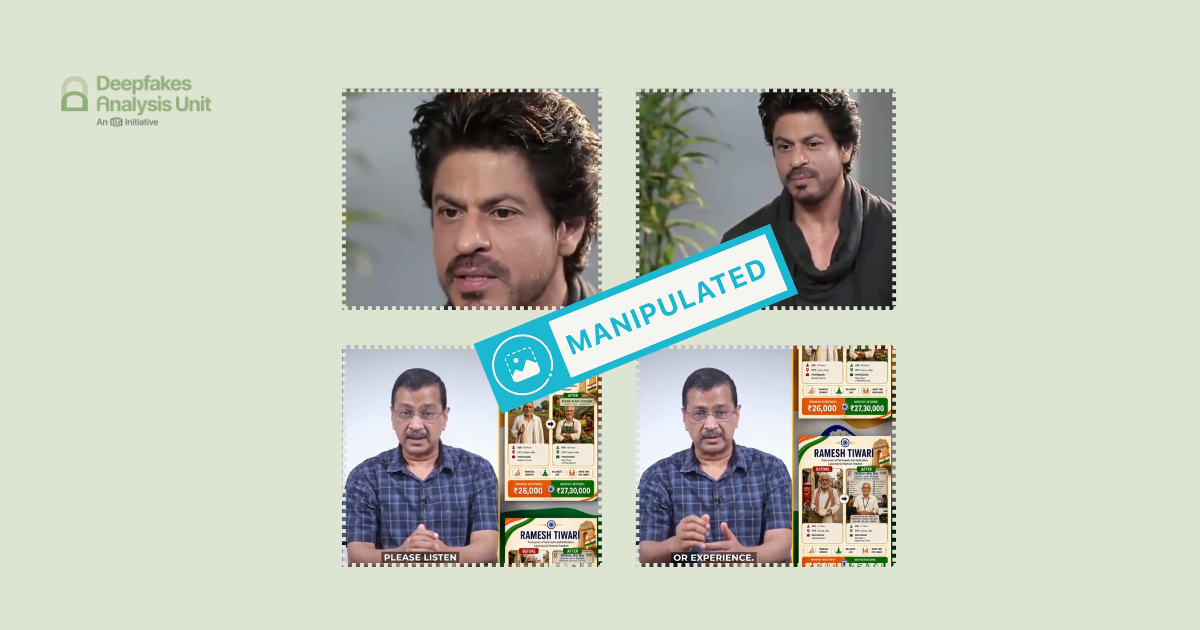
The Deepfakes Analysis Unit (DAU) analysed two videos, one of them apparently features Bollywood actor Shah Rukh Khan and the other seemingly features Arvind Kejriwal, National Convenor, Aam Aadmi Party. In each video the subject appears to be promoting a financial investment project; the words in the audio tracks of both videos are identical. After putting the videos through A.I. detection tools and getting our expert partners to weigh in, we were able to conclude that the videos were manipulated using synthetic audio.
Both the videos are in English and were discovered by the DAU on Facebook during social media monitoring. Mr. Khan’s purported video spans two-minutes and eight-seconds; and Mr. Kejriwal’s supposed video is two-minutes and four-seconds long. (The videos are not accessible on Facebook anymore.)
We do not have any evidence to suggest whether the suspicious videos originated from an account on Facebook, X, or elsewhere.
The video supposedly featuring Kejriwal is packaged like an advertisement with the frame comprising his visuals along with graphics. He is visible to the left of the frame in a medium close-up looking straight into the camera without moving his head or shifting his gaze, as if making a televised address.
His backdrop is plain white and brightly lit. For the most part, his arms seem to be resting on a platform with his hands moving in an animated manner in a few frames. Captions in English relay the transcript of the audio content over his visuals.
A little less than the right-half of the video frame displays colourful rolling graphics over a digital representation of the fluttering Indian flag. These graphics show names, some associated images, and convey the amount of money supposed individuals have made from the get-rich-quick financial program and how it changed their lives. The same sequence of names repeat throughout the video.
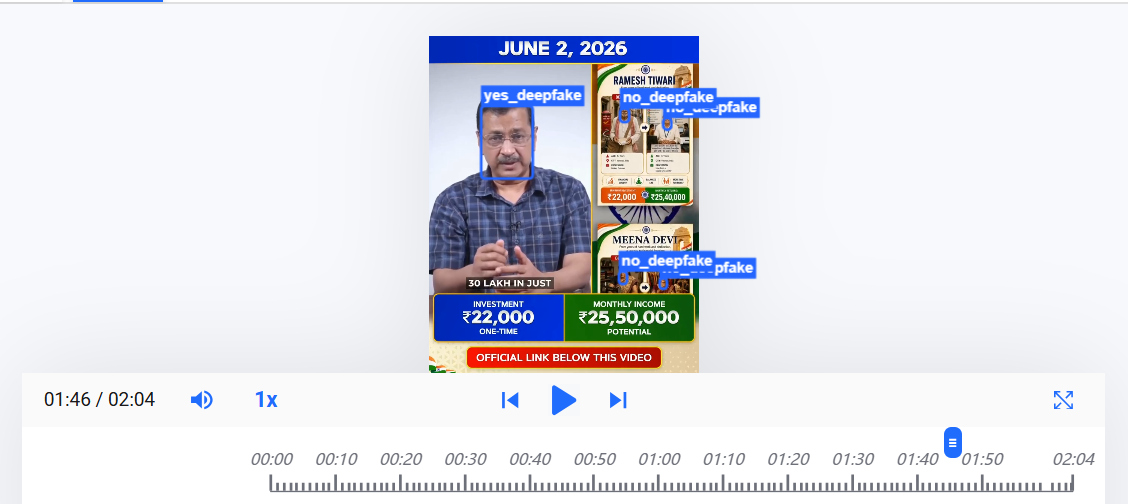
Bold text graphics in white set against a blue background visible at the top of the video frame read: “June 2, 2026”. Another horizontal arrangement of text graphics set in the same colour scheme, visible in the lower left-half of the frame reads: “Investment ₹ 22,000 One-Time”. Next to it, a similar arrangement of text graphics set in white against a green background reads: “Monthly Income ₹25,50,000 Potential”. Below these graphics, bold text in white against a red background reads: “Official Link Below This Video”.
Khan has been captured in a close-up for most of his purported video, with some visuals showing his medium close-up as well. He appears seated in an indoor setting with a greyish wall and a plant partially visible in the backdrop. He seems to be speaking to someone in front of him as his head and gaze are positioned at a specific angle and his hands move in an animated manner throughout. Bold text captions in white visible in the lower part of the video frame relay the words heard in the audio track.
The overall quality of both the videos is decent with some visible jump cuts in Khan’s purported video.
In Kejriwal's supposed video the lip movements and the corresponding audio track do not synchronise perfectly, there’s a lag between the two; the lips also move in a puppet-like manner in some frames. The area from the mouth to the chin is blurry and the teeth are barely visible.
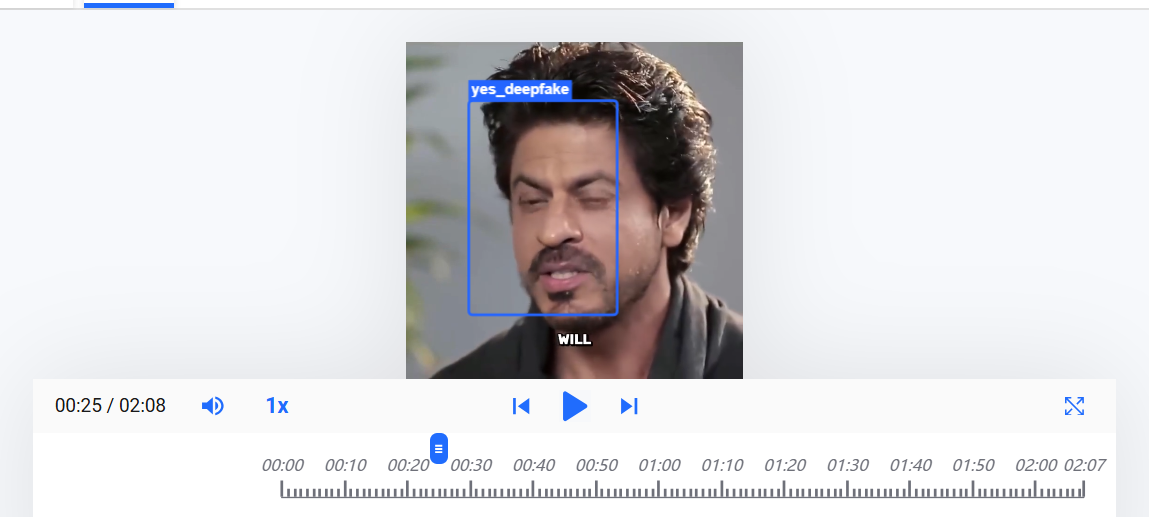
In Khan’s purported video the lip-sync is well done. His lips appear to change colour in some frames, the area around the lips seems to vibrate; and the teeth lack definition in a few frames. His moustache appears blurry especially around the corners of the upper lip in some frames.
The visual oddities highlighted above are likely signs of digital manipulation in the videos.
We compared the voice attributed to each subject with their respective recorded speeches and interviews available online. There is similarity in the voice and pitch in both sets of voices. However, Khan’s characteristic delivery is faster and he tends to use filler words, which can’t be heard in his purported audio track. Kejriwal’s delivery is slower and has natural pauses, which aren’t part of the audio track in his supposed video.
We undertook a reverse image search using screenshots from the two videos. Kejriwal’s visuals were traced to this video published from the official YouTube channel of Aam Aadmi Party on April 27, 2026. Khan’s visuals were traced to this video published on Jan. 20, 2017 from the YouTube channel of Film Companion Studios, which focuses on long-form storytelling on film and entertainment.
The clothing and body language of Kejriwal and Khan are identical in the videos we traced and the ones we reviewed; the respective backdrops are similar but not identical as cropped frames seem to have been used in the videos we reviewed. The audio in Khan’s video that we traced is in English while Kejriwal’s is in Hindi; the content in both videos is different from the videos we reviewed.
In Kejriwal’s source video, the wall behind him carries the portraits of Dr. B.R. Ambedkar—one of India’s founding fathers, and Bhagat Singh—an Indian revolutionary leader; a table top is clearly visible in his foreground—none of these elements are part of his doctored video. There are no graphics or captions in this video unlike the doctored video.
In Khan’s source video a tall plant is fully visible in the backdrop and the profile of a female anchor interviewing him is captured in his medium close-ups. The video also has visuals of Khan and the anchor sitting across a table with a mug each in front carrying the “Film Companion” logo; a wall with framed movie posters; and books stacked up on a platform. Neither the anchor nor the other elements are visible in his doctored video, the captions seen there are not in the source video.
It seems that short clips from Khan’s source video have been lifted and stitched together to create the manipulated version. On the other hand, a clip from Kejriwal’s source video has been lifted and used to create the doctored video, which is seamless with no jump cuts or transitions.
The tone, packaging, and messaging in the doctored videos, including the suggestion of making an initial investment of 22,000 rupees, is similar to that repeatedly used in several A.I. manipulated financial scam videos that we have debunked. The use of identical audio content across such videos is a trend that we have seen and highlighted through our reports previously as well, such as here and here.
Shared below is a table that compares the transcripts of the audio tracks of the Khan and Kejriwal doctored videos. We want to point to the copycat nature of these videos only to inform our readers, not to give oxygen to bad actors behind such harmful and misleading content.
.png)
To discern the extent of A.I. manipulation in the videos we reviewed, we put them through A.I. detection tools.
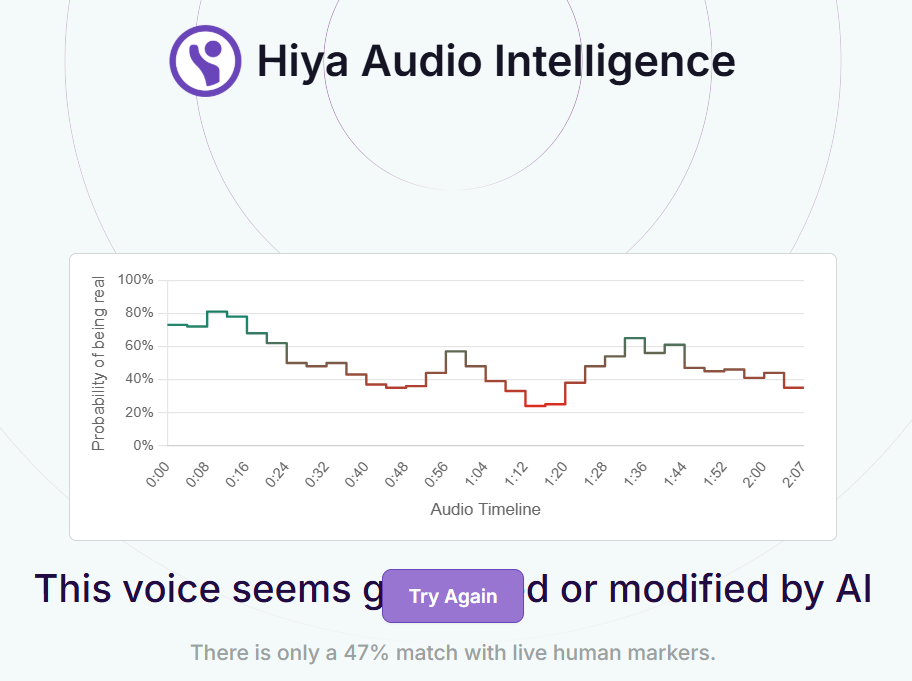
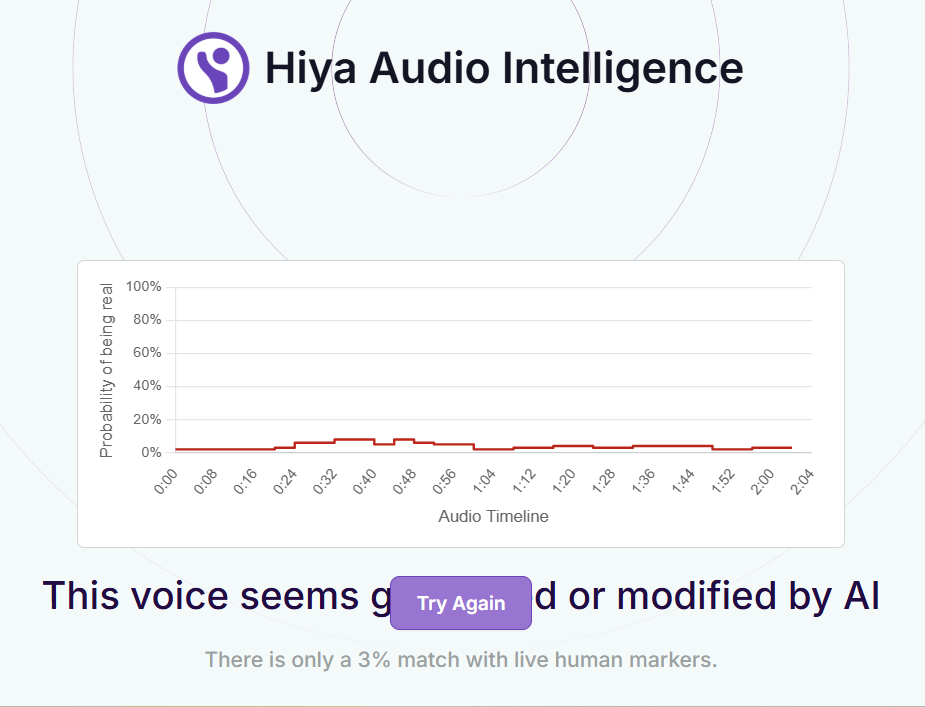
The voice tool of Hiya, a company that specialises in artificial intelligence solutions for voice safety, indicated that there is a 53 percent probability that the audio track in Khan’s doctored video was modified or generated using A.I. For Kejriwal’s manipulated video, the tool gave a 97 percent probability for the audio having been modified or generated using A.I.
Hive AI’s deepfake video detection tool highlighted several markers of A.I. manipulation in the doctored videos of Khan and Kejriwal. Their audio detection tool highlighted a 40-second segment as “A.I.-generated” in Khan’s purported audio track. Several audio segments aggregating to about 110 seconds in Kejriwal’s supposed audio track were identified as “A.I.-generated” by the tool.
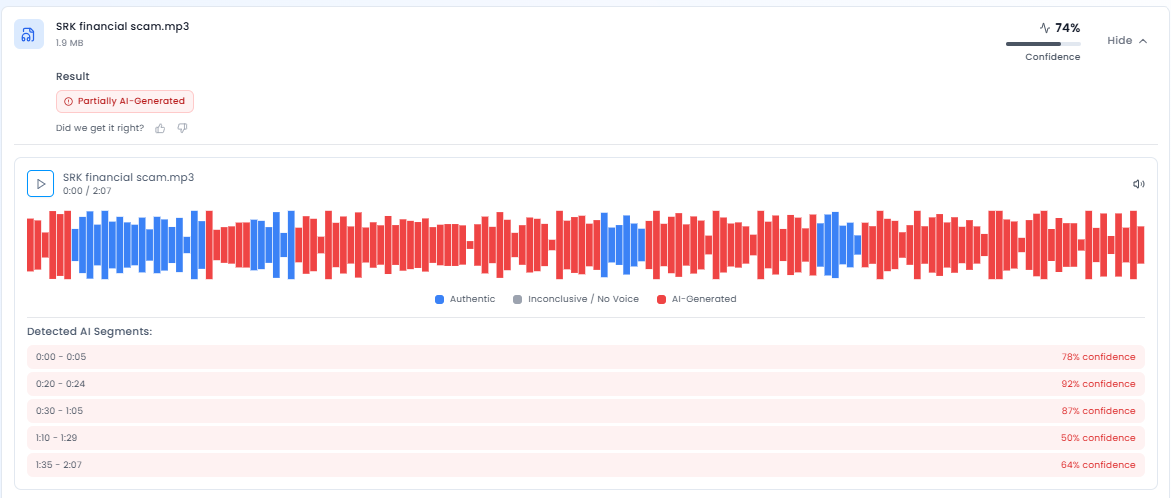
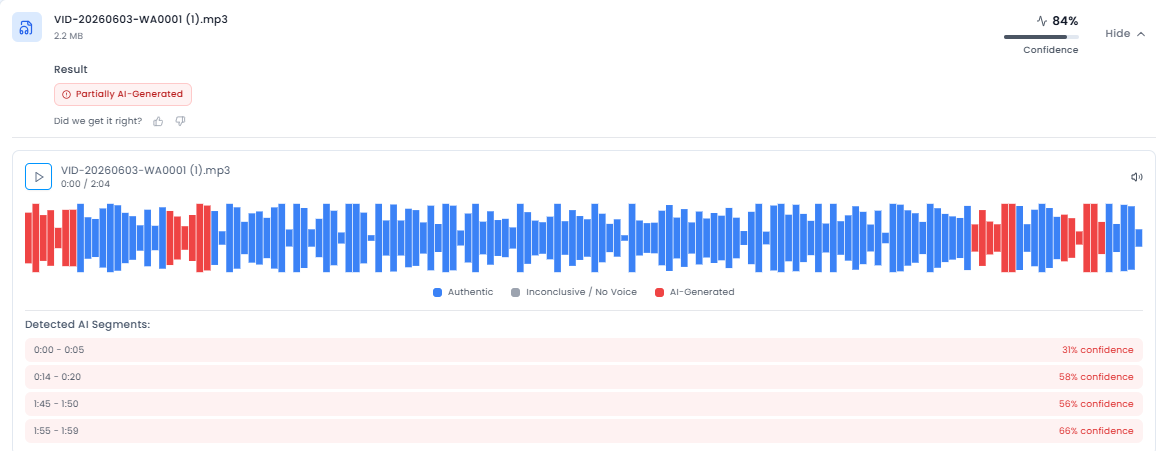
We also ran the audio tracks through the advanced audio deepfake detection engine of Aurigin.ai, a Swiss deeptech company. The results suggested that both the audio tracks were partially A.I.-generated; the confidence score for Khan’s purported audio was 74 percent and for Kejriwal’s supposed audio it was 84 percent.
We further put the audio tracks through the A.I. speech classifier of ElevenLabs, a company specialising in voice A.I. research and deployment. The results that returned indicated that it was “very unlikely” that the audio tracks in the doctored videos were generated using their platform. However, a further analysis by the team established that the audio tracks attributed to Khan and Kejriwal are synthetic or A.I.-generated.
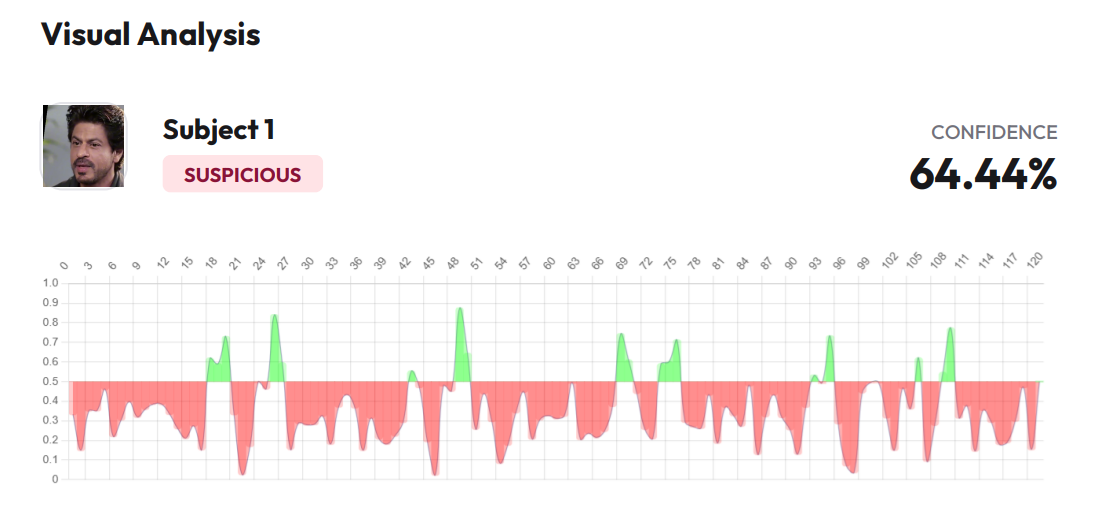
To get an analysis on the videos we reached out to ConTrails AI, a Bangalore-based startup with its own A.I. tools for detection of audio and video spoofs. The team ran both the manipulated videos through audio and video detection models. The results that returned indicated A.I. manipulation in the video track and audio track of both the doctored videos, although with low confidence.
The team noted that in Khan’s purported video, lip-sync A.I. technique was used to manipulate the mouth region and synchronise it with the audio track. They highlighted that the lip movements appear unnaturally smooth and consistent, which is indicative of the use of state-of-the-art lip-sync generation tools. In the associated audio track, they detected indicators consistent with A.I.-generated speech produced through voice cloning techniques.
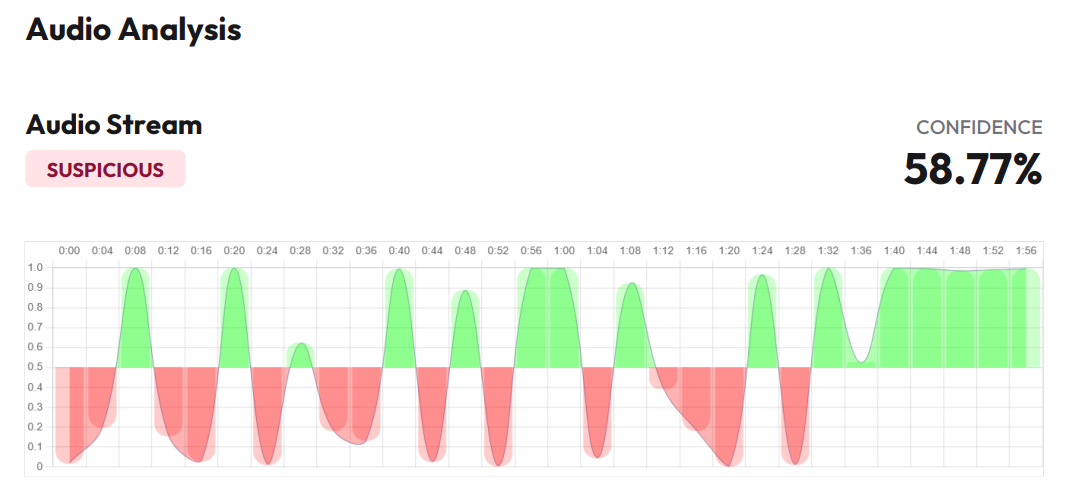
In the doctored video of Kejriwal, as well, the team noted that A.I.-based lip-sync manipulation technique was applied to the mouth region to align lip movements with the audio track. They added that the resulting lip movements exhibit an unusually smooth and temporally consistent motion, a characteristic commonly associated with modern A.I.-powered lip-sync generation techniques. In the audio track, as well, they detected signs consistent with A.I.-generated speech via voice cloning techniques.
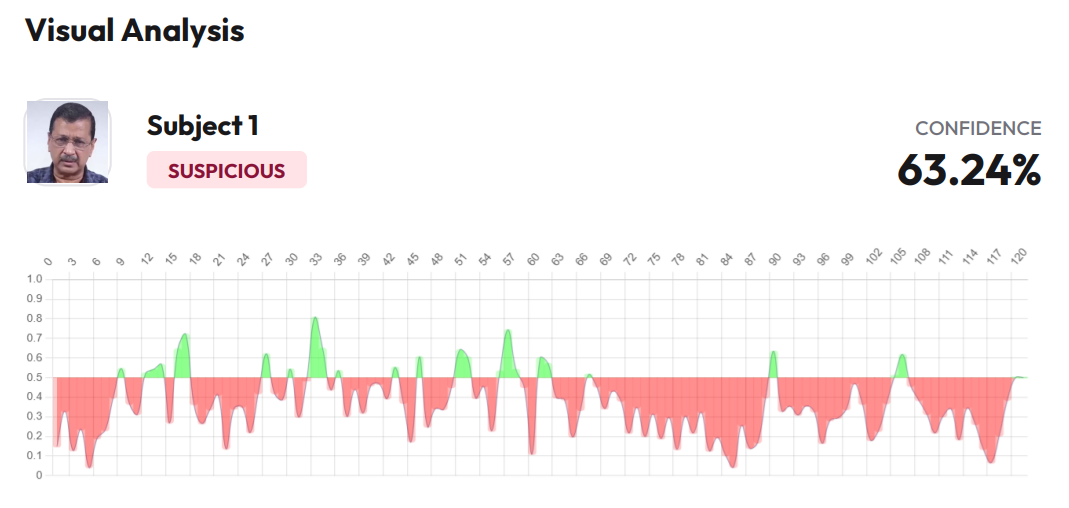
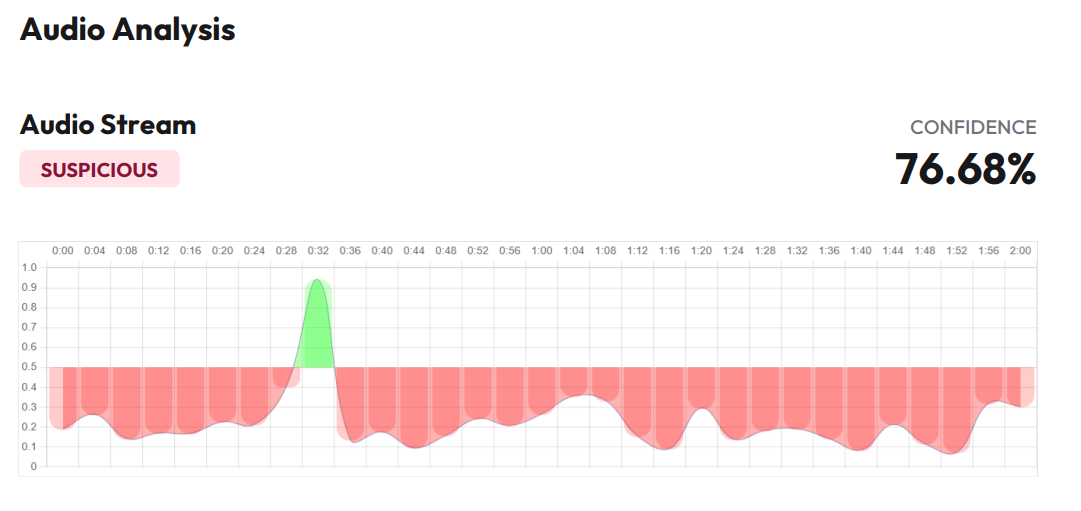
To get further expert analysis on the video featuring Khan, we escalated it to Global Online Deepfake Detection System (GODDS), a detection system set up by Northwestern University’s Security & AI Lab (NSAIL). The video was analysed by two human analysts, run through 22 deepfake detection algorithms for video analysis, and 70 deepfake detection algorithms for audio analysis.
Of the 22 predictive models, 13 gave a higher probability of the video being fake and the remaining nine gave a lower probability of the video being fake. Of the 70 predictive models, 35 gave a higher probability of the audio being fake and another 35 gave a lower probability of the audio being fake.
In their report, the team noted that the voice accompanying Khan’s visuals does not match the natural cadence and breathing patterns of genuine speech; nor does the voice align with his lip movements.
They explained that the artefacts are largely obscured by poor video quality, making it difficult to discern possible artefact manipulation from the video’s heavy compression. They further noted that these indicators could perhaps be explainable by other factors, such as motion blur. In conclusion, the team stated that the video is likely manipulated via artificial intelligence.
To get experts to weigh in on Kejriwal’s doctored video we reached out to our partners at RIT’s DeFake Project. Kelly Wu from the project shared the same source video that we have pointed to above. Ms. Wu noted that the subject’s mouth is the only region that’s modified across the fake video clip.
Wu pointed to specific time codes from the video to highlight how the subject’s mouth often doesn't sync with the audio properly when he appears to speak. She noted that the rolling images in the video reflect what current generative A.I. models tend to create when one is doing text-to-image prompting.
Saniat Sohrawardi from the project added that it seems that the video was generated with a wav2lip-like lip-sync generator. Wav2lip is a speech-to-lip generation code repository available online for video generation.
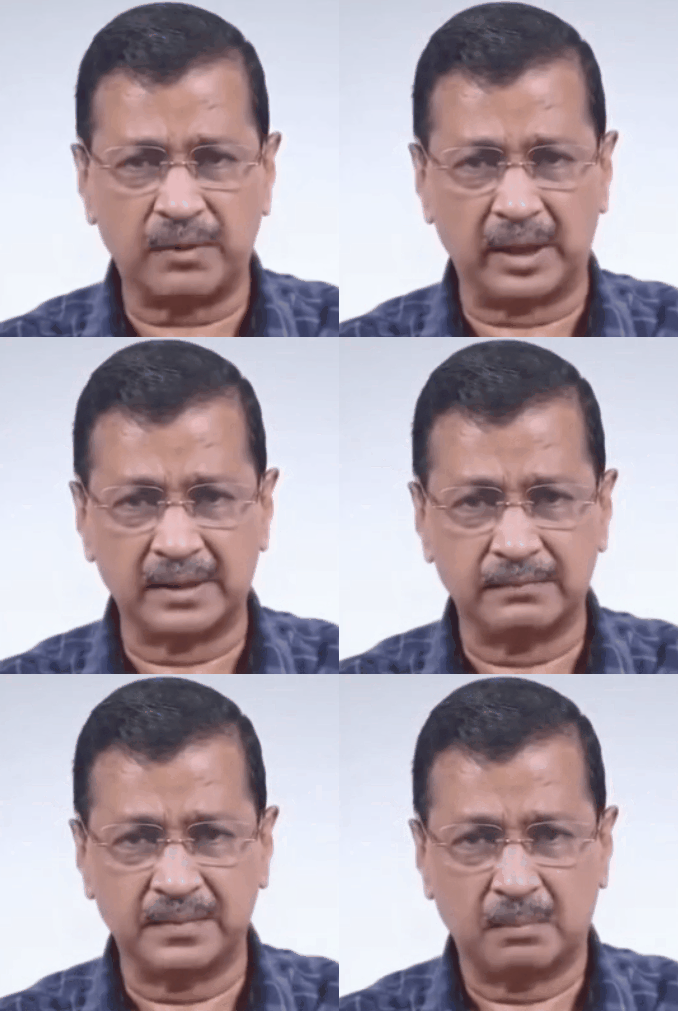
Mr. Sohrawardi noted that the most visible artefact in the video is when Kejriwal’s moustache appears to expand unnaturally for a second; explaining that it could have been a glitch because at that moment the subject’s purported voice grows slightly louder.
Akib Shahriyar from the project ruled out the possible use of an image-to-video generation model for video creation. Mr. Shahriyar identified a specific segment from the source video, which was likely lip-synced with fake audio to produce the doctored video.
On the basis of our observations and expert analyses, we can conclude that in each video original footage was used with synthetic audio to peddle a false narrative about Khan, Kejriwal promoting a dubious financial program. The audio similarity in the videos points to an attempt by bad actors to expedite the process of generating fake content to scam the public.
(Written by Debraj Sarkar with inputs from Priyadarshini Ukil and Sourav Singh, edited by Pamposh Raina.)
(Kindly Note: The manipulated audio/video files that we receive on our tipline are not embedded in our assessment reports because we do not intend to contribute to their virality.)
You can read the fact-checks related to this piece published by our partners:
Fact Check: Kejriwal promotes fraud AI-based ‘money-making’ platform? No, viral video is deepfake
Fact Check: SRK promotes AI-powered money-making scheme? No, video is a deepfake

.png)